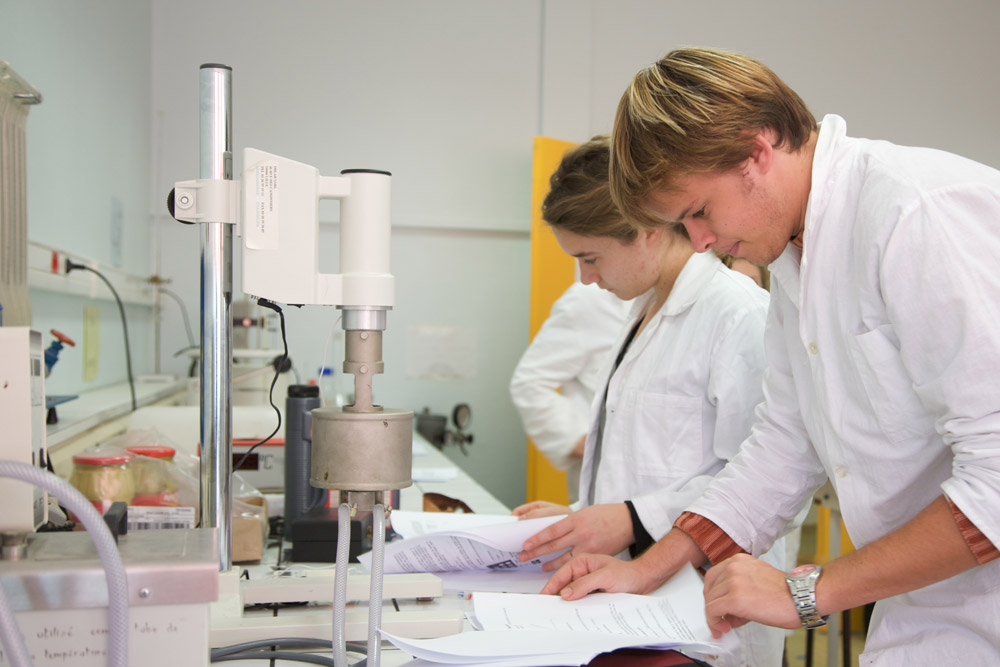

relating to the circular bioeconomy, the sustainable use of natural resources, the protection of the environment and rural development.
We aim to enhance our members' success in education, research and innovation for a sustainable bioeconomy and society, by engaging with European and global institutions and networks, to share experience, cooperate in new ventures, and benefit from the resulting synergy.
For any questions or additional information regarding the Forum, please contact:
Dr Rasa Pakeltienė
Secretary General
Association for European Life Science Universities (ICA)
Tel: +370 672 00184
Email:
The event will be held at University of Agricultural Sciences and Veterinary Medicine Cluj-Napoca, Romania (Calea Manastur, 3-5, Cluj Napoca ) in the Biodiversity Research Centre.
Getting to USAMV Cluj-Napoca
The fastest and most affordable way to get around Cluj-Napoca is by using the city's public transport network, operated by the Cluj-Napoca Public Transport Company (CTP). The network includes buses, trolleybuses, and trams, providing convenient connections throughout the city.
The University of Agricultural Sciences and Veterinary Medicine of Cluj-Napoca (USAMV) is easily accessible by public transport. The nearest stop to the campus is Fabrica de Bere (direction here), served by Bus 1, 6, and 25, from which the university is approximately a 5-minute walk.
Tickets can be purchased from ticket vending machines located at major public transport stops, or by contactless bank card directly on board most buses, trolleybuses, and trams or using the 24Pay mobile application.
1 Arrival by train
Cluj-Napoca can currently be reached by international rail only via Budapest, as the only direct international train connection is between Budapest and Cluj-Napoca. The journey takes approximately 10 hours, and a one-way ticket typically costs around €26. Travelers coming from other countries generally need to connect through Budapest before continuing to Cluj-Napoca by train.
Upon arrival at Cluj-Napoca Central Railway Station, participants can easily reach the city centre by taking bus line 9 from Piața Gării. The journey to the central area takes approximately 10–15 minutes, depending on traffic.
2 Arrival by Bus
Cluj-Napoca is well connected to several European capitals and major cities through an extensive network of international long-distance coach services. Regular routes operated by companies such as FlixBus provide direct or one-transfer connections from cities including Budapest, Vienna, Bratislava, Prague, Munich, and Berlin, as well as many other destinations across Europe. International coaches arrive at the Cluj-Napoca Airport Park & Ride bus station. From there, participants can take Bus 5 to Sora stop, then transfer to Bus 1, 6, or 25 to Fabrica de Bere stop. The USAMV is approximately a 5-minute walk from the bus stop. Taxi and ride-hailing services are also available from the bus station.
3 Arrival by Plane
Cluj International Airport (CLJ) is located approximately 9 km from the city centre and offers direct flights to numerous European destinations, making it one of Romania's best-connected regional airports. Several convenient transport options are available to reach the city centre and the USAMV.
3.1 Airport Express Bus- A1E
The Airport Express Bus (A1E) provides a fast and convenient connection between Cluj International Airport (CLJ) and the city centre. The bus serves key stops, including Central Railway Station, Mihai Viteazul Square, and Sora, making it easy to reach many parts of the city.
The journey from the airport to the city centre takes approximately 25–30 minutes, depending on traffic. The fare is 6 RON (approximately €1.20) per journey and can be paid directly on board using a contactless bank card, from ticket vending machines, or using the 24Pay mobile application.
3.2 Taxi and Ride-hailing Services
Taxis are readily available outside the arrivals terminal, and Uber and Bolt also operate at Cluj International Airport. The journey to the city centre or the USAMV typically takes 20–30 minutes, depending on traffic. The fare is approximately €10–15, making taxis a convenient option for travelers with luggage or those arriving late in the evening.
3.3 Bus
Several public bus lines connect Cluj International Airport (CLJ) with the city. Public bus services operate between 05:20 and 22:50, providing regular connections between Cluj International Airport (CLJ) and the city. From the bus stop located outside the airport terminal, you can take Bus 5 or Bus 8 to Sora stop. From there, transfer to Bus 1, 6, 25, or 24B and get off at Fabrica de Bere stop. The University of Agricultural Sciences and Veterinary Medicine of Cluj-Napoca (USAMV) is approximately a 5-minute walk from the bus stop.
A standard public transport ticket costs 3 RON (approximately €0.60) and is valid for one journey. Tickets can be purchased using the 24Pay mobile application, from ticket vending machines, or by contactless bank card directly on board most buses.
4 Arrival by Car
Parking in Cluj-Napoca is available both in public parking facilities and at many hotels and other accommodation providers, which often offer on-site or nearby parking for their guests. Information on public parking facilities throughout the city is also available through the website:https://primariaclujnapoca.ro/parcari/
Participants may also have the option of parking on the university campus. The address is: University of Agricultural Sciences and Veterinary Medicine Cluj-Napoca 3–5 Calea Mănăștur, 400372 Cluj-Napoca, Romania. The parking fee is approximately €3 per hour (RON 15/hour), with the first 30 minutes free.
9 minutes walking distance from the University, Hotel Cristal (Boutique Hotel) is a modern 3-star accommodation facility located close to the Central Park, Cluj Arena, and Platinia Shopping Center.
All participants who will make a reservation under the code ICA 2026 at the email address
25 minutes walking distance (20 minutes with the public transport) from the University, Hotel Napoca is known for hosting major business events and leisure travelers since 1969. Completely renovated in 2022, it combines modern luxury with scenic views along the Someșul Mic River.
14 minutes walking distance from the University, Radisson Blu Hotel, Cluj is a premium 5-star hotel located in the heart of Cluj-Napoca, right next to the Central Park.
Special rate for the ICA Cluj conference (breakfast, VAT, spa & fitness access):
The room reservation will be made by email sent to the reservations department @Reservations, Cluj and
14 minutes travel with the public transport from the University, DoubleTree by Hilton Hotel Cluj - City Plaza is a premium 4-star hotel located on a quiet street in the historic center of Cluj-Napoca, right next to the Central Park.
The excursion will be organized in the main USAMV Cluj-Napoca campus to visit the research infrastructure - Life Sciences Research Institute; Institute for Advanced Horticulture Research of Transylvania; Veterinary clinics; University museum. The campus visit concludes at 16:30, with convenient transport connections to Cluj-Napoca airport (approximately 40 minutes, with expected arrival at 17:30).
The Gala Dinner and ICA Excellence Award Ceremony will be hosted at Banff Castel, located approximately 30 km from Cluj-Napoca. A shuttle bus will be provided from the USAMV Cluj-Napoca campus. Further logistical information will be shared with participants closer to the event.
During the Gala Dinner, the ICA Excellence Award Ceremony will take place, and the 2026 ICA Excellence Awards will be presented. Nominations for the ICA Excellence Awards are currently open. For further information and details on how to submit a nomination, please visit ICA Excellence Awards 2026 – Call for Nominations.
We invite senior university representatives to submit proposals on behalf of their institution for short interventions in the Spotlight Session: How Universities Contribute to Food Systems Resilience.
The session will take place on the first day of the Forum 2026, Thursday, 15 October 2026, and will explore how life science universities can become stronger actors in building food systems resilience.
Your proposal should highlight one or more successful initiatives in one or more of the following focus areas:
Selected contributors will be invited to give a 5-minute presentation using no more than three PowerPoint slides.
Please submit a brief description of your proposed intervention to Rasa Pakeltienė at
| DAY 1 – ICA Rectors and Deans Forum “Food Systems Resilience and Global Food Security” |
||
| Time | Programme | Speakers / Information |
| 11:00–12:00 | Registration & Networking Lunch | |
| 12:00–12:30 | Extraordinary General Assembly (Hybrid) | |
| 12:30–12:45 | Welcome and Opening Strategic framing: Food systems resilience and food security have become central geopolitical, environmental and societal priorities, requiring stronger collaboration between universities, governments, industry and society. |
Maria K. Wedel ICA President, Vice Chancellor, Swedish University of Agricultural Sciences, Sweden Cornel Cătoi Rector, University of Agricultural Sciences and Veterinary Medicine of Cluj-Napoca, Romania Local policy stakeholders |
| 12:45–13:15 | Opening Keynote “The Future of Food Security in an Era of Permanent Disruption” Climate change impacts; geopolitical instability; strategic autonomy; food supply vulnerabilities; resilience of agricultural systems; and the role of science and universities. |
Rosalinda Scalia Unit Bioeconomy & Food Systems (B2), DG Research & Innovation, European Commission |
| 13:15–14:15 | Session I – Major Threats to Food Systems Resilience Objective: Create a shared strategic understanding of the risks affecting global and European food systems, including climate volatility and extreme weather, biodiversity loss, fertilizer and energy dependency, supply chain disruptions, digital transformation gaps, war and geopolitical instability, and changing consumer preferences. Format: Expert panel |
John Ingram *other panelists will be confirmed soon |
| 14:15–14:35 | Coffee Break | |
| 14:35–15:45 |
Session II – How Universities Contribute to Food Systems Resilience SUP-RIM: Research network of life science universities for the development of the Polish dairy sector Building Value Where the Chain Is Thinnest: A University-Anchored Agri-Food Innovation Ecosystem |
Mieke Uyttendaele Ghent University, Belgium Anna Bzducha-Wróbel Warsaw University of Life Sciences, Poland Zoltán Kovács Hungarian University of Agriculture and Life Sciences *other speakers will be confirmed soon
|
| 15:45–17:00 | Session III – Research, Innovation and Policy for Food Security Themes: Translating science into policy; innovation uptake in agriculture; collaboration with governments and industry; public trust in science; EU research priorities; and international cooperation. Format: Policy roundtable |
Mugurel Ionel Jitea (Moderator)
Agnes van den Pol-van Dasselaar Federation Secretary of the European Grassland Federation (EGF)
|
| 17:00 | Day 1 Conclusions & Closing Reflection | |
| 19:30 | Gala Dinner | |
| DAY 2 – Special Rectors' Forum “What It Means to Be a Life Science University in a Polarised World” This becomes a complementary leadership-focused continuation of the food systems discussions. |
||
| Time | Programme | Speakers / Information |
| 08:00–08:30 | Registration | |
| 08:30–09:10 | Opening Conversation – “Leadership, Trust and Responsibility in Times of Division” | |
| 09:10–10:15 | Breakout Sessions Theme I – “Protecting Academic Values in Polarised Societies” Academic freedom; institutional autonomy; political pressures; freedom of speech; and societal trust in universities. Theme II – “Leading Universities Through Uncertainty and Crisis” Crisis leadership; institutional resilience; communication and public engagement; balancing strategic and civic missions; wellbeing and leadership pressures; and advocating for the life sciences. Theme III – “Can Universities Help Rebuild Social Cohesion?” Are universities still trusted institutions? What role should rectors play in public debate? Can universities become spaces for dialogue and democratic resilience? |
Eva Schulev-Steindl (Theme I Moderator) |
| 10:15–10:45 | Coffee Break | |
| 10:45–11:30 | Call to Action – “The Future Role of University Leadership” Final reflection: What kind of rector leadership will future societies require? |
|
| 11:30 | Closing | |
| 12:00–13:30 | Networking Lunch | |
| 13:30 | Social Programme Suggested by the host |
|
The registration for the ICA Rectors and Deans Forum 2026 is open: Please register by filling in this form: ICA Rectors and Deans Forum 2026 – Fill in form
We kindly invite you to register before 25 September 2026.
Forum Audience
The ICA Forum for Rectors, Vice Rectors, Deans, and senior managers of agricultural and life science universities in Europe aims to provide the opportunity to meet, to discuss current issues in the agricultural and life sciences and to exchange views on issues with relevant stakeholders in industry, government and NGOs
ICA invites Rectors, Vice Rectors, Deans, and senior managers in their university, college, school or faculty being responsible for education, research and innovation to participate in the Forum. In addition, academic/faculty staff and degree programme coordinators are encouraged to participate.
Registration Fee
The Registration fee for delegates from an ICA Member Institution is 450 €. For a second registration from the same institution the fee is 425€
The Registration fee for delegates NOT from an ICA Members Institution is 500 €. For a second registration from the same institution the fee is 475€.
The Registration fee for Forum includes all meals from lunch on 15 October at the start of the Forum as indicated in the programme and ending with lunch on the second day.
There is no registration fee for the local event on Friday afternoon, 16 October 2026.
The Registration is managed by the ICA Secretariat and the invoices are handled directly by the ICA Secretariat for the Registration fee(s).
Cancellation policy